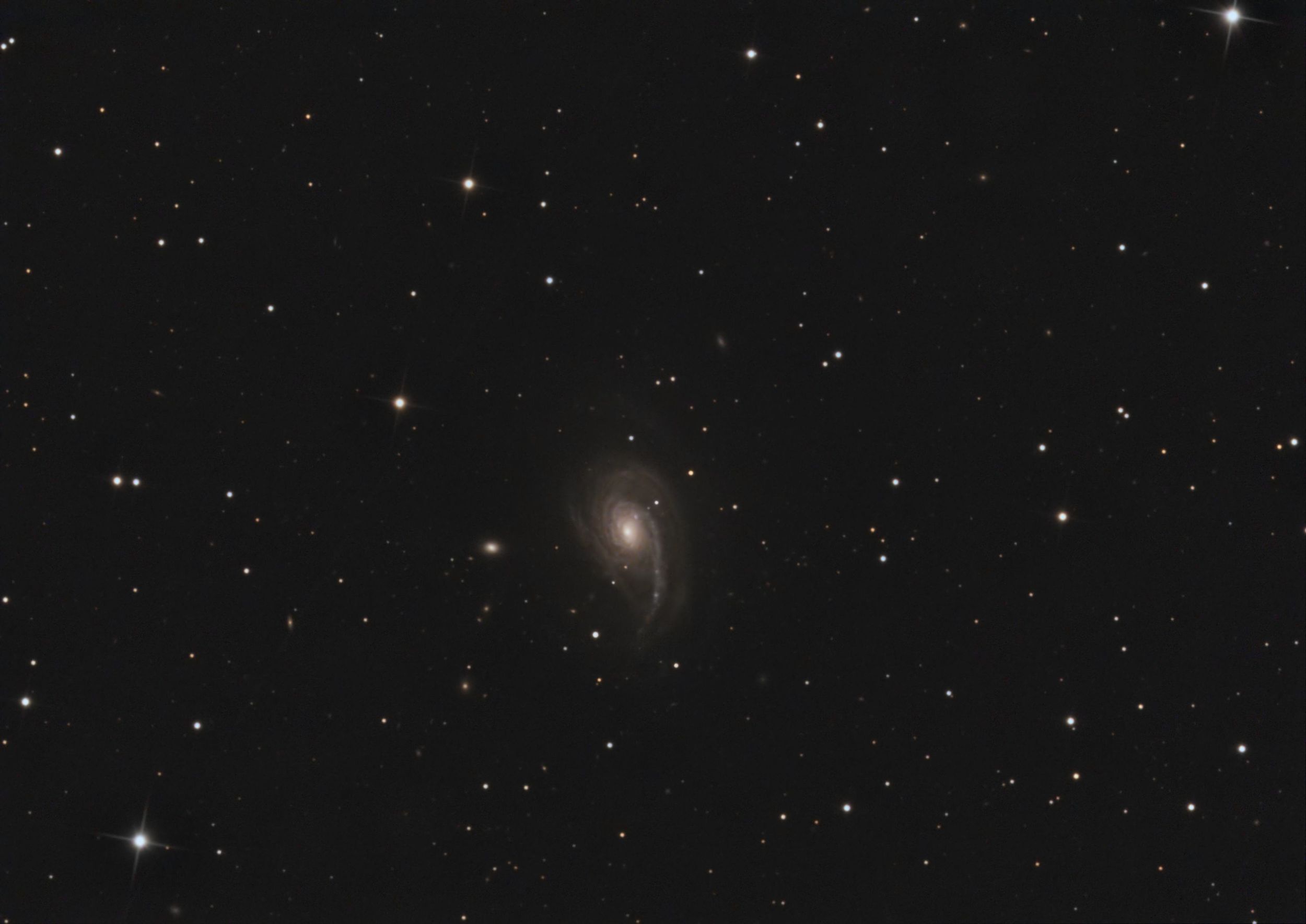
Capturing "Mirach’s Ghost": NGC 404 and Beta Andromedae
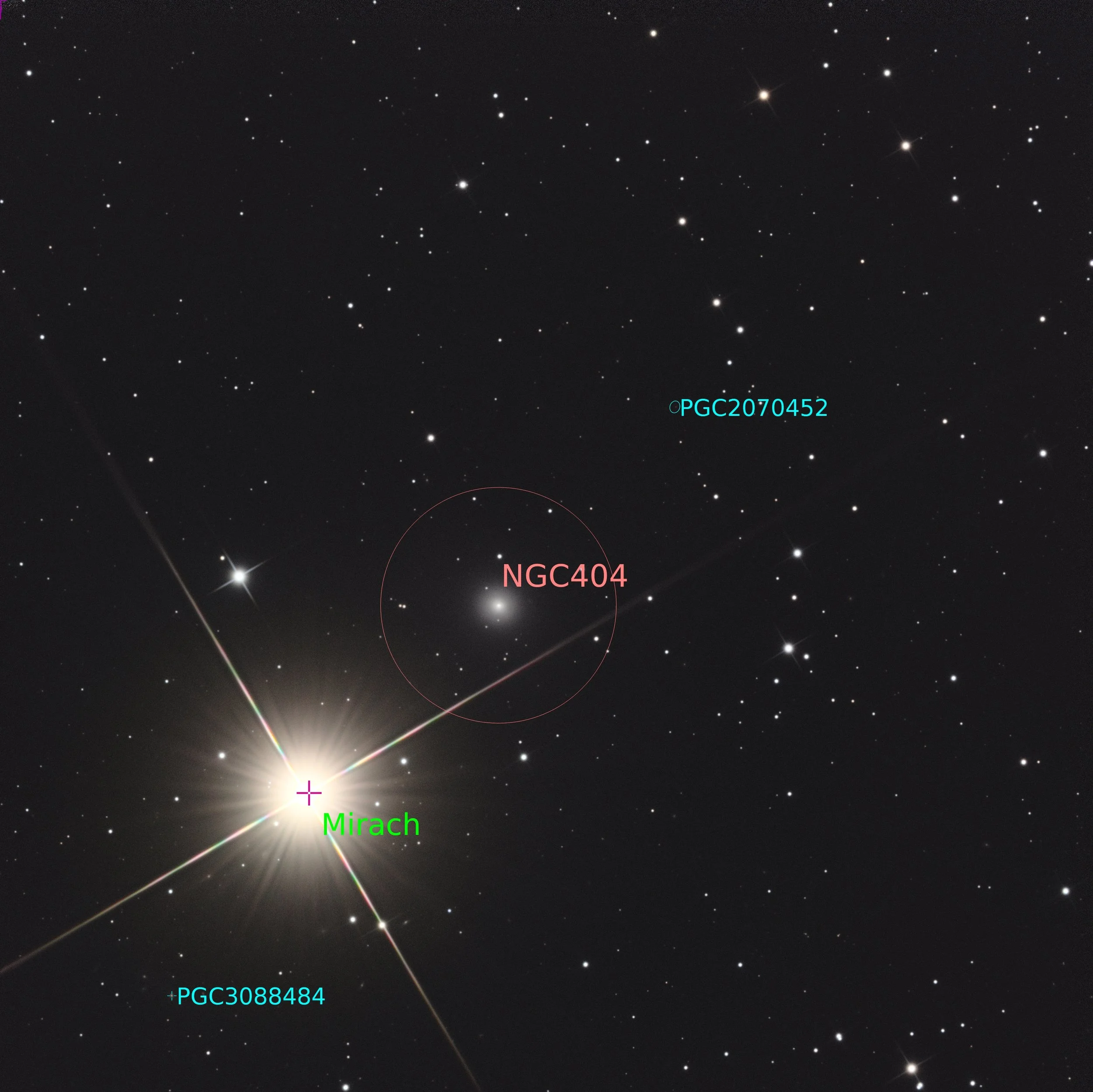
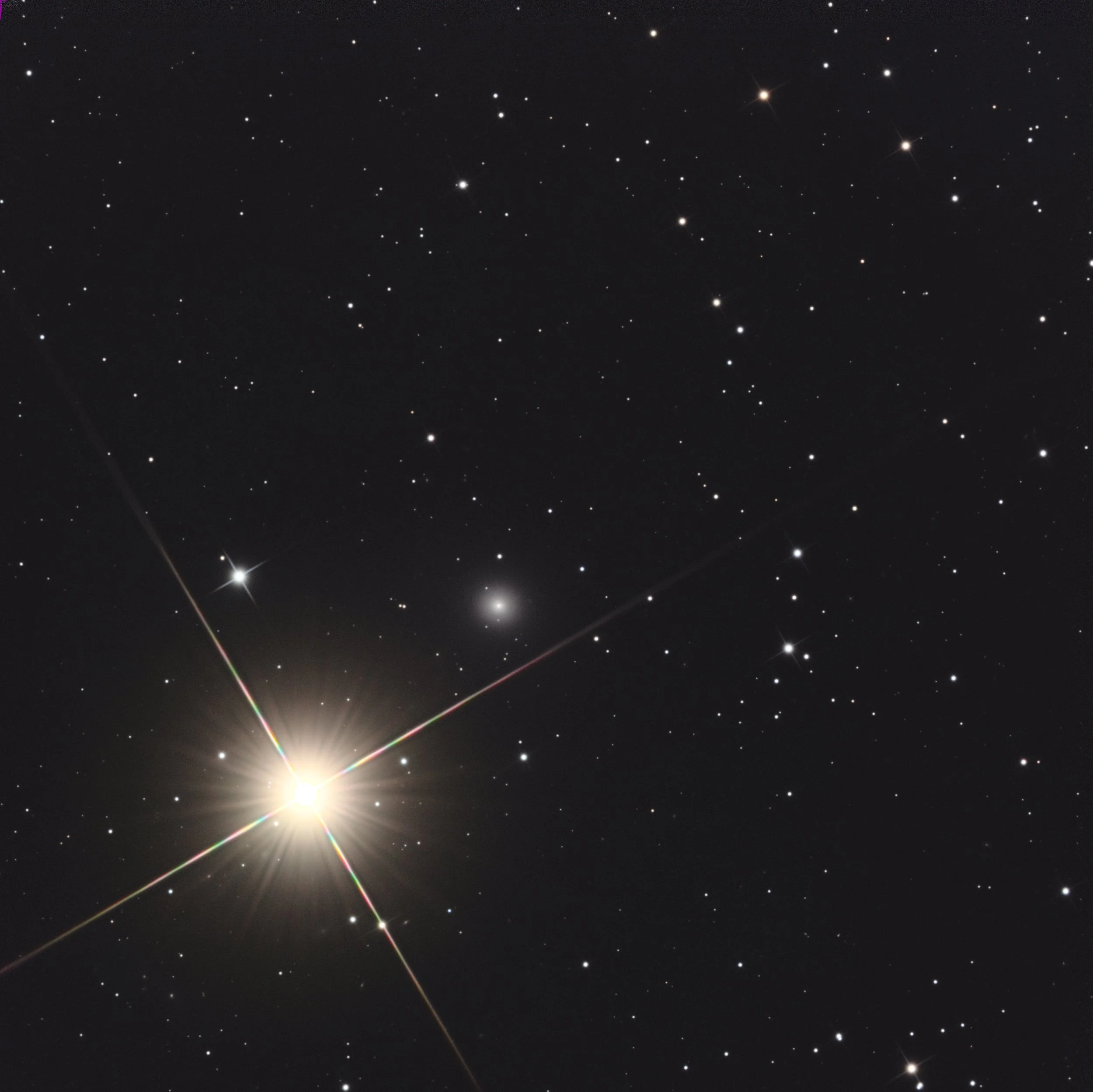
Imaging dwarf field galaxies can be a tough challenge, especially when they sit right next to a glaring stellar giant. Taking advantage of this great stretch of weather we’ve had for the last few days, from my home under the skies of Mars Hill, NC, I set my sights on NGC 404—popularly known as Mirach’s Ghost.
7 arcminutes away from the brilliant red giant Mirach ($\beta$ Andromedae), this target presents a classic astrophotography test: controlling severe glare and star bloat to reveal the subtle, faint halo of a distant galactic neighbor.
Scientific Details
Mirach (beta Andromedae): A prominent red giant star located approximately 197 light-years from Earth. With a spectral type of M0 III and a visual magnitude of roughly 2.05, it shines brightly in our night sky, radiating much of its energy in the infrared spectrum. Its intense glare often overwhelms nearby faint objects, making processing a delicate balance.
NGC 404: Located roughly 11 million light-years away—far beyond Mirach in deep space—NGC 404 is an isolated dwarf lenticular galaxy. Despite its proximity to Mirach in line-of-sight visual projection, it sits isolated in the local field beyond the Local Group. It features an early-type dwarf morphology with a central star-forming region driven by a low-mass central supermassive black hole.
Equipment & Imaging Setup
Mount: Sky-Watcher Wave 150i
Telescope: CarbonStar 6" Ritchey-Chrétien (1377 mm Focal Length)
Camera: QHY 533 Mono
Filters: Baader LRGB
Annotated Image Details
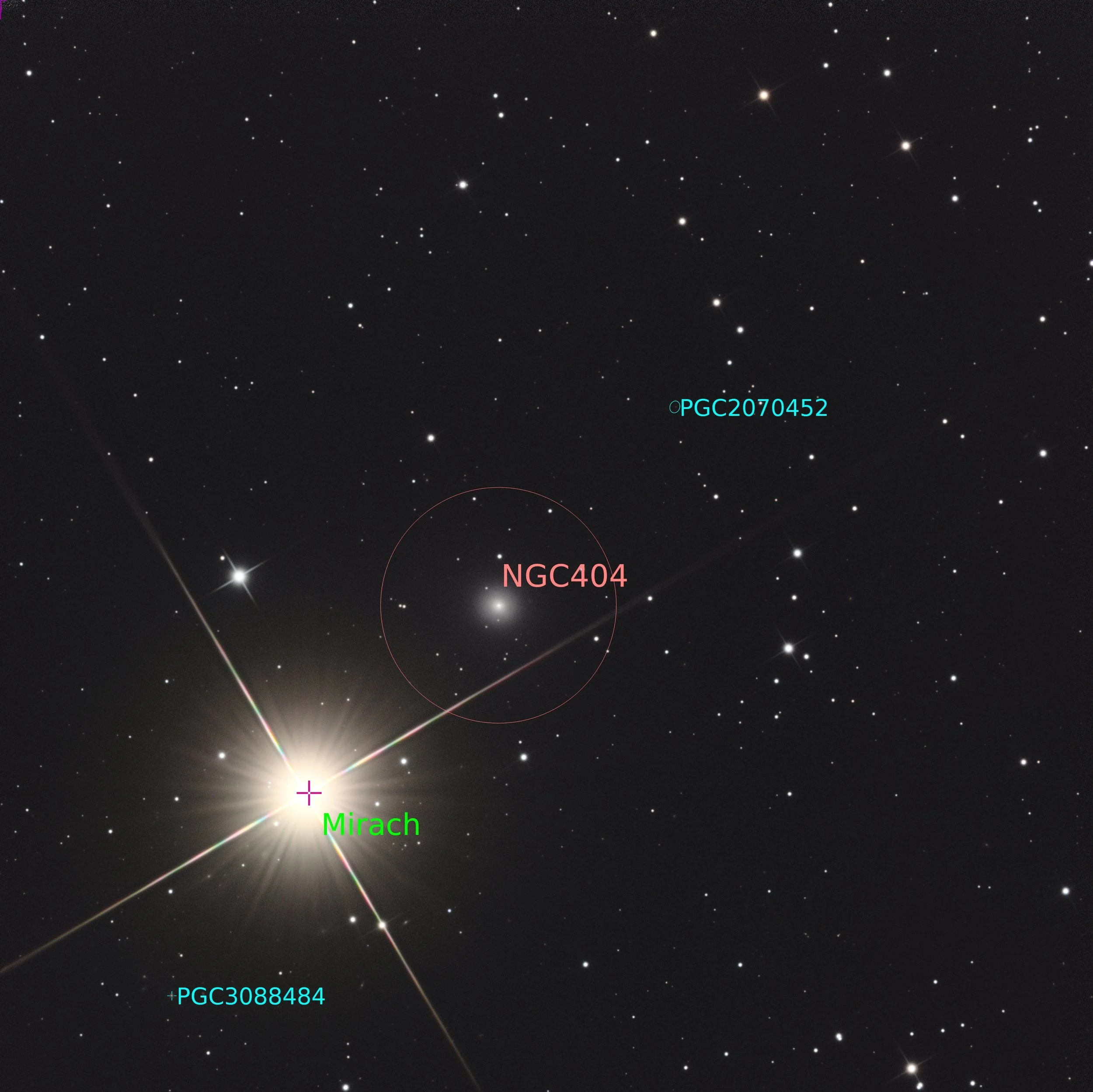
To help map out the field, I annotated the processed image using plate-solving data:
Mirach (beta Andromedae) sits prominently marked at the bottom center.
NGC 404 is clearly visible just north of Mirach, showing its bright compact nucleus and surrounding faint shell.
PGC 2070452 and PGC 3088484 highlight faint background field galaxies captured across the wider deep frame.

I’ve been a dedicated to Squarespace fan for 20 years. Love the product, people and company.