NGC 7538 in Narrowband: 10 Hours of First Light on the Northern Lagoon
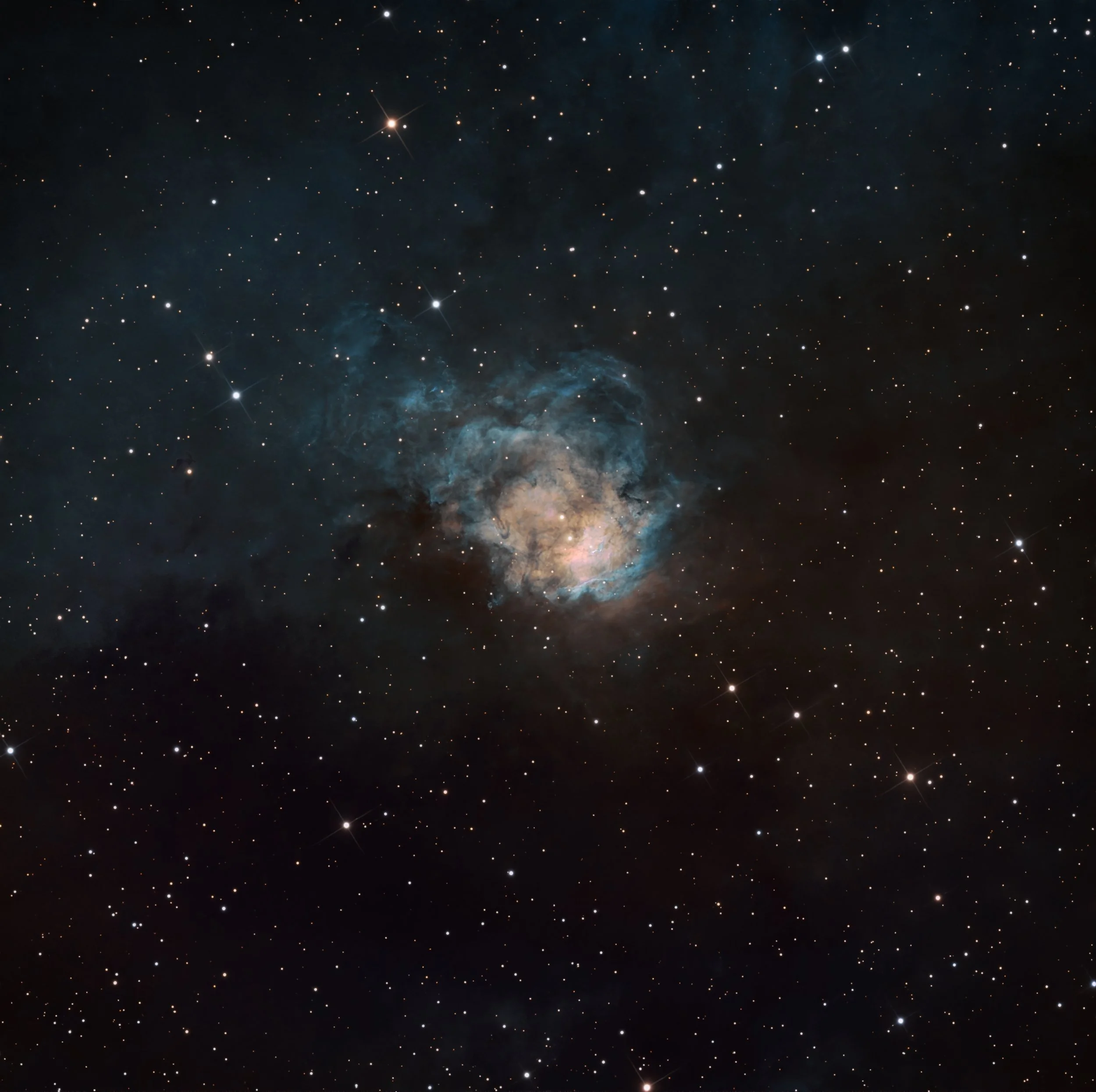
Overcoming Technical Hurdles Under Mars Hill Skies
There is nothing quite like a run of crystal-clear mountain nights in Mars Hill, North Carolina. Over the last three nights, the skies held clear from dusk until dawn, giving me a rare opportunity to collect deep integration on a new target: NGC 7538 (often called the Northern Lagoon Nebula), an active star-forming region located about 9,100 light-years away in Cepheus.
This was my first time imaging this target, and like many deep-sky projects, it came with a few learning curves.
On the first night, a meridian flip alignment issue unfortunately wiped out a full session's worth of OIII and SII data. Rather than scrapping the effort, I reset the rig, dialed in the tracking routines, and ran flawless all-night sessions for the following two nights without a single error. In total, I stacked 10 hours of clean narrowband data in SHO (Sulfur II, Hydrogen-alpha, Oxygen III).
Acquisition & Rig Performance
The setup performed remarkably well once the flip issue was resolved. The CarbonStar 6" Riccardi-Honders / provided fast optical throughput, allowing tight star shapes and crisp detail right to the edge of the field.
Telescope: CarbonStar 6" Ritchey-Chrétien (RC 152mm f/9, 1370mm focal length)
Camera: QHY533M Mono
Filters: Baader Narrowband (Ha, OIII, SII)
Mount: Sky-Watcher EQ6-R Pro / 150i series mount
Location: Mars Hill, NC (Bortle 4)
Total Integration: ~10 Hours
Processing in PixInsight & Astro Pixel Processor / AstroWizard
Processing this target in the Hubble Palette (SHO) requires balancing the dominant Hydrogen-alpha emissions with the subtle, faint Oxygen III filaments scattered throughout the core.
Stacking & Calibration: Aligned and stacked using PixInsight to preserve delicate background details.
Gradient & Color Mapping: Applied gradient removal and mapped the channels to SHO (SII to Red, Ha to Green, OIII to Blue).
Stretching & Contrast Enhancement: Used generalized hyperbolic stretching and targeted curve adjustments in AstroWizard / PixInsight to invert the dominant green hue, pushing the core into rich amber golds and soft teal blue accents.
The resulting frame brings out the dynamic, dusty pillars where massive new stars are actively forming.